

Football fans love a good season opener, and the meeting between the Cleveland Browns and the Jacksonville Jaguars on September 13, 2026, gave them plenty to talk about. Played at EverBank Stadium in Jacksonville, this Week 1 matchup carried extra weight because it marked the coaching debut of Todd Monken with the Browns, while Jaguars head coach Liam Coen began his second season looking to build on a surprising turnaround from the year before. The final score read 34-10 in favor of Jacksonville, but the number that matters most to readers searching for detail is buried in the individual performances. This article breaks down the match player stats from every important angle, looking at passing numbers, rushing production, receiving totals, and defensive contributions, while also explaining what those numbers mean for both franchises going forward.
A Season Opener With High Stakes
Jacksonville entered this game carrying a lot of momentum. The previous season, the Jaguars flipped a 4-13 record into a 13-win campaign and an AFC South division title under Coen, so expectations were understandably high heading into Year 2. Cleveland, on the other hand, was starting fresh after parting ways with its previous head coach following a rough two-year stretch. Todd Monken stepped in as the new leader of the Browns, and this contest served as his very first test in the regular season. Games like this often reveal more about a team’s identity than mid-season matchups do, since both coaching staffs were still figuring out rotations, play-calling rhythm, and how their rosters would respond under real pressure.
Trevor Lawrence Sets the Tone Early
The story of the day on the Jacksonville side belonged to quarterback Trevor Lawrence. He completed 18 of 23 passes for 245 yards and threw four touchdown passes without a single interception. That kind of efficiency is rare in any game, let alone a season opener, and it showed just how comfortable Lawrence looked running Coen’s offense for a second year in a row. His accuracy percentage sat well above 75 percent, and he spread the ball around to multiple targets rather than leaning on one favorite receiver. Lawrence’s performance picked up right where his previous season left off, when he had already returned to form after a couple of inconsistent years.
Deshaun Watson’s Return to the Field
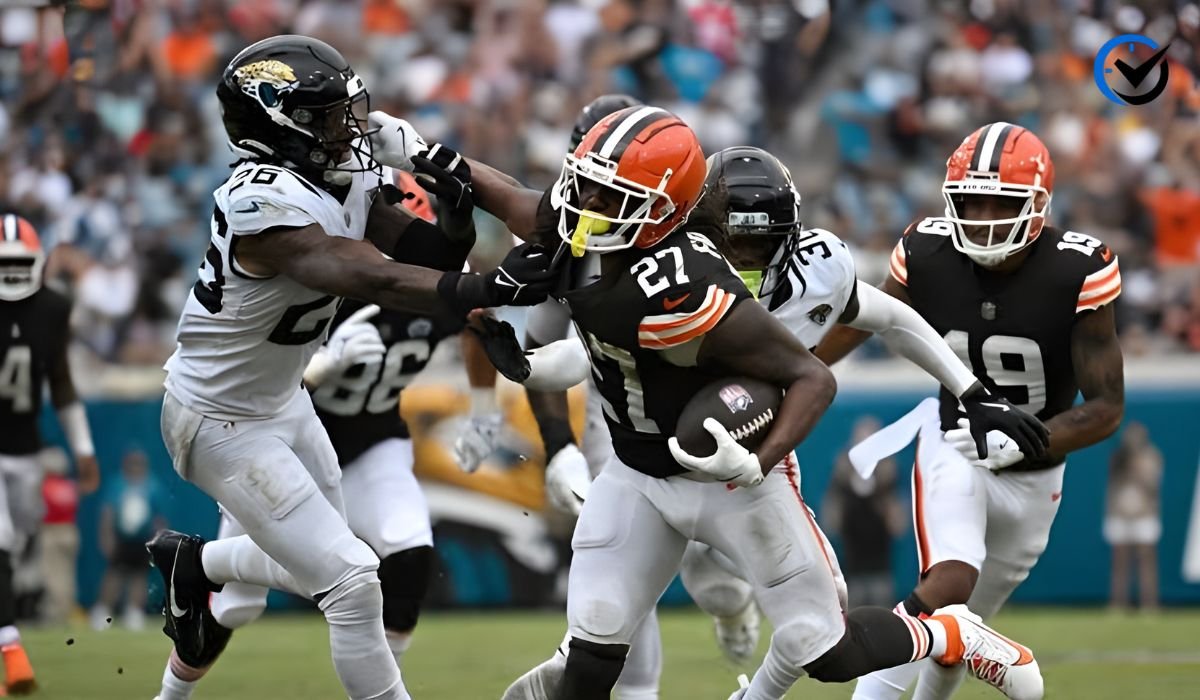
On the other side, Deshaun Watson made his return as Cleveland’s starting quarterback after dealing with a pair of Achilles tears that had kept him out of action. Watson finished 16 of 22 for 205 yards, one touchdown, and one interception through the air, while also adding 38 rushing yards on six carries. Those rushing numbers show he was still willing to use his legs, even after a long layoff from significant injuries. Interestingly, Watson had never lost to Jacksonville in seven previous starts against the franchise, covering home games, road trips, and even an overseas matchup in London. That streak came to an end in dramatic fashion, as he was sacked five times and pressured on several other dropbacks throughout the afternoon.
Jacksonville’s Passing Attack Spreads the Wealth
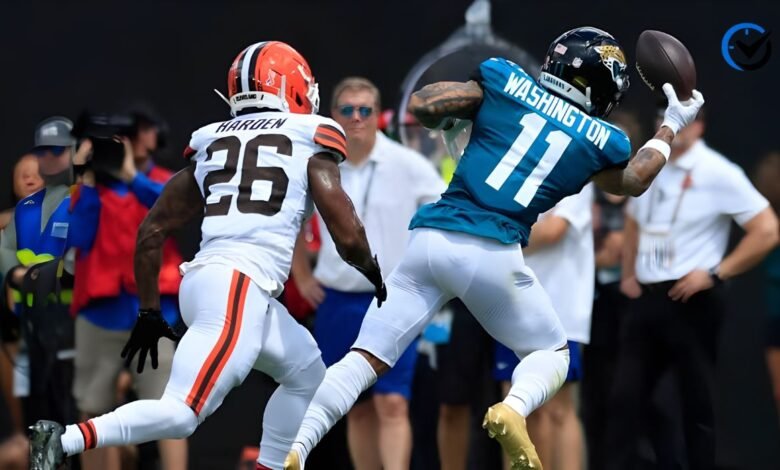
What made Lawrence’s day so impressive was how many different players benefited from his accuracy. He connected with Parker Washington, rookie Josh Cameron, Brenton Strange, and Jakobi Meyers for touchdown receptions, meaning four separate players found the end zone through the air. Parker Washington led all receivers in the game with 83 receiving yards on five catches, including one of those touchdown grabs. That kind of receiver depth is exactly what an offensive coordinator dreams about, since it makes the passing game far harder for a defense to scheme against. When a quarterback has four or five reliable options instead of just one or two, opposing coordinators cannot simply focus their coverage on a single star.
Cleveland’s Receiving Production
Cleveland’s leading receiver on the day was Denzel Boston, who caught two passes for 59 yards, including a 46-yard touchdown reception with just 1:52 left on the clock. That late score prevented the game from feeling even more lopsided and gave Browns fans a small highlight to hold onto. Boston’s big play showed flashes of what he could become as a downfield threat for this offense moving forward. Beyond that touchdown, though, Cleveland’s receiving corps struggled to generate consistent separation, which limited Watson’s ability to move the ball efficiently through the air for most of the contest.
Match Score Table
| Team | Final Score | Result |
|---|---|---|
| Jacksonville Jaguars | 34 | Win |
| Cleveland Browns | 10 | Loss |
Key Team Stats
| Statistic | Browns | Jaguars |
|---|---|---|
| Total Yards | 272 | 360 |
| First Downs | 14 | 23 |
| Third-Down Conversions | 1/8 | 5/10 |
| Penalties | 11–75 yards | 4–25 yards |
| Turnovers | 2 | 0 |
| Points Scored | 10 | 34 |
The Ground Game on Both Sides
Rushing stats told an interesting story as well. Jacksonville running back Bhayshul Tuten carried the ball 15 times for 66 yards, giving the Jaguars a steady complement to their aerial attack. Ground production like that keeps opposing defenses honest and helps control the clock, which matters a great deal in games where a team builds an early lead. Cleveland’s rushing attack was largely powered by Watson himself, since his six carries for 38 yards actually outpaced any single running back on the roster that day. That imbalance suggests the Browns may need more dependable production from their running back room as the season progresses.
A Costly Special Teams Mistake and a Bright Spot
Special teams played a role in this game too, in both good and bad ways for Cleveland. Rookie receiver KC Concepcion Jr. lost a fumble that hurt the Browns’ chances of sustaining drives, adding to a difficult day overall. On a more positive note, Raheim Sanders provided a genuine spark when he returned a kickoff 74 yards, which set up a 26-yard field goal in the third quarter. That single return was one of the more electrifying individual plays of the entire game and showed the kind of explosive talent Cleveland has available on special teams, even during a lopsided defeat.
Defensive Standouts for Jacksonville
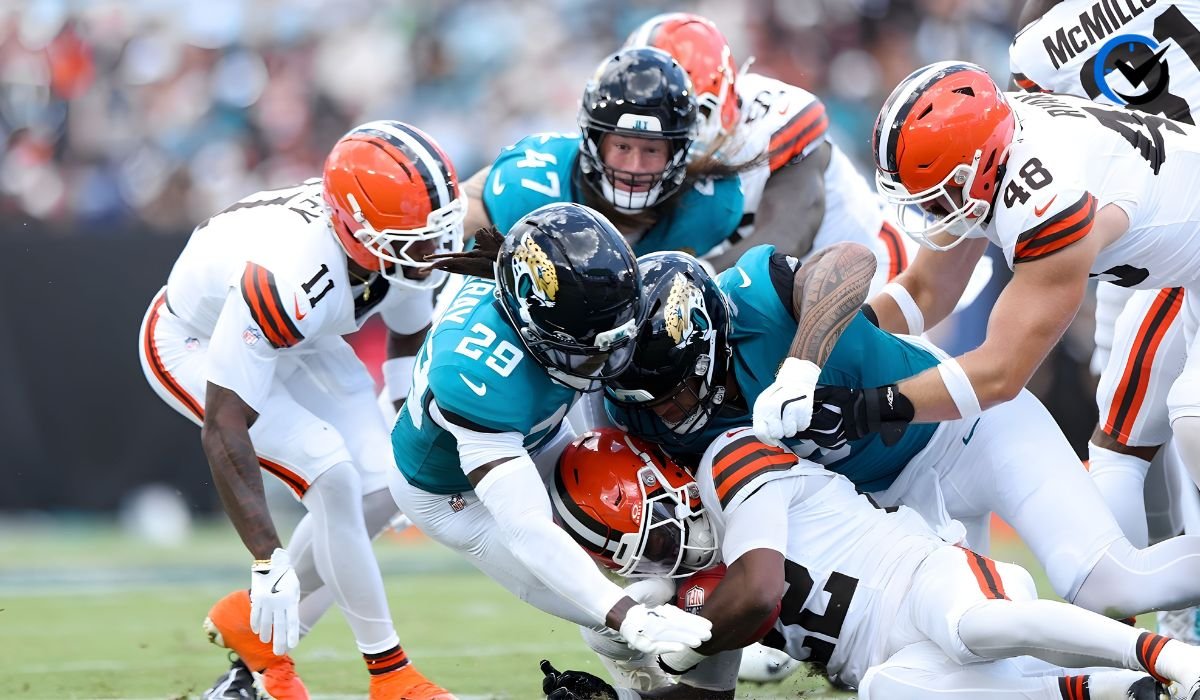
Defensively, Jacksonville’s pass rush made life difficult for Watson all afternoon. Josh Hines-Allen recorded 1.5 sacks, continuing his reputation as one of the more disruptive edge rushers in the league. Alongside him, defensive tackle M. Graham added a full sack of his own, contributing to the five total sacks Cleveland’s offensive line allowed during the game. In the linebacker corps, V. Miller finished with 10 tackles, seven of them solo stops, showing up consistently against both the run and short passing routes. That kind of tackling efficiency from a linebacker often reflects strong pursuit angles and disciplined gap control, both hallmarks of a well-coached defense.
Cleveland’s Defensive Effort
Cleveland’s defense was not without its own bright spots, even in a losing effort. Linebacker C. Schwesinger led the Browns with 10 tackles, including three solo stops, which meant he was around the ball constantly throughout the game. Given how often Jacksonville’s offense stayed on the field, especially with six scoring drives out of their first seven possessions, it makes sense that Cleveland’s linebackers were logging heavy tackle counts just trying to slow down the bleeding. Unfortunately for the Browns, individual tackling numbers rarely tell the full story when an offense is converting third downs and sustaining long drives at a high rate.
Total Yardage and Efficiency Numbers
Looking at the broader team totals helps put the individual player stats into context. Jacksonville outgained Cleveland 360 total yards to 272, a gap that reflects the Jaguars’ ability to move the chains more consistently. First downs told a similar story, with Jacksonville picking up 23 compared to Cleveland’s 14. Third down conversions were especially lopsided, as the Jaguars converted 5 of 10 attempts while the Browns managed just 1 of 8. That kind of third down disparity usually decides games on its own, since it directly controls how many possessions each offense actually gets and how much time each defense spends on the field.
Penalties and Turnovers Compound the Problem
Discipline was another factor working against Cleveland. The Browns were flagged 11 times for 75 yards, compared to just four penalties for 25 yards on Jacksonville’s side. Penalties like these often erase positive plays or extend opposing drives, both of which chip away at a team’s chances of staying competitive. Turnovers added to Cleveland’s troubles as well, with two giveaways compared to zero for Jacksonville. Between the fumble lost by Concepcion Jr. and the interception thrown by Watson, the Browns handed Jacksonville extra opportunities that a team already playing from behind simply cannot afford to give away.
Red Zone Struggles for Cleveland
One statistic that stands out when reviewing this game closely involves red zone execution. The Browns reached the opponent’s 20-yard line on multiple occasions but failed to convert either trip into a touchdown. Settling for field goals or coming away with nothing in the red zone is one of the fastest ways to lose a game against a team that is scoring touchdowns on nearly every possession. This is an area Monken and his offensive staff will likely emphasize heavily in practice, since red zone efficiency often separates competitive teams from teams that fall behind early and never recover.
What This Means for Jacksonville Moving Forward
For Jacksonville, this performance builds on the momentum they carried into the season. A four-touchdown, zero-interception outing from Lawrence, combined with balanced contributions from the receiving corps and a productive rushing performance from Tuten, suggests this offense has real staying power. Travis Hunter Jr., the two-way standout who was limited by injury the previous year, is expected to factor more heavily into this offense as the season continues, which should only add more explosiveness to an already dangerous unit. If Jacksonville can maintain this level of offensive balance while their defense continues generating consistent pressure, they will be difficult for any AFC opponent to handle.
What This Means for Cleveland Moving Forward
Cleveland’s outlook after this game is more complicated. Watson’s return showed some positive signs, particularly his willingness to use his legs and his connection with Boston on that late touchdown, but the turnovers, sacks allowed, and red zone failures point to real issues that need addressing. Monken’s first game as head coach did not go as planned, but first games rarely define an entire season. The Browns’ next matchup comes against Tampa Bay, giving Monken and his staff a quick opportunity to make adjustments based on what went wrong in Jacksonville. How Cleveland responds in the following weeks will say far more about this team’s direction than a single opening week loss ever could.
Final Thoughts
This matchup between the Cleveland Browns and Jacksonville Jaguars delivered exactly the kind of season-opening storyline fans expect from two franchises heading in very different directions. Trevor Lawrence and Jacksonville’s offense looked sharp, efficient, and dangerous from start to finish, while Deshaun Watson’s return offered both promising flashes and clear areas for improvement as Cleveland tries to rebuild under new leadership. Individual performances like Denzel Boston’s late touchdown, Raheim Sanders’ explosive kickoff return, and the strong tackling efforts from both Schwesinger and Miller remind us that even in a lopsided final score, there is always more nuance beneath the surface. As both teams continue their seasons, this game will likely serve as a reference point, a measuring stick for how far each roster has come by the time these two franchises meet again.
Frequently Asked Questions
1. What was the final score of the Cleveland Browns vs Jacksonville Jaguars game?
Jacksonville defeated Cleveland by a score of 34-10. The game was played on September 13, 2026, at EverBank Stadium in Jacksonville, Florida, as part of Week 1 of the regular season.
2. How did Trevor Lawrence perform in this game?
Trevor Lawrence had an excellent outing, completing 18 of 23 passes for 245 yards and four touchdowns without throwing an interception. His accuracy and ability to distribute the ball to multiple receivers were major factors in Jacksonville’s win.
3. What were Deshaun Watson’s stats in this matchup?
Deshaun Watson completed 16 of 22 passes for 205 yards with one touchdown and one interception. He also rushed six times for 38 yards, marking his return to the starting lineup after recovering from injury.
4. Who led Cleveland in receiving yards?
Denzel Boston led the Browns in receiving with two catches for 59 yards, including a 46-yard touchdown reception late in the fourth quarter that provided one of Cleveland’s few offensive highlights.
5. Who led Jacksonville in receiving yards?
Parker Washington led all receivers in the game with five catches for 83 yards and one touchdown, making him the most productive pass catcher on either roster that day.
6. How many sacks did Jacksonville’s defense record?
Jacksonville’s defense recorded five total sacks against Deshaun Watson, with Josh Hines-Allen contributing 1.5 sacks and defensive tackle M. Graham adding one full sack among the group effort.
7. What role did special teams play in the game?
Special teams had a mixed impact for Cleveland. Raheim Sanders provided a big spark with a 74-yard kickoff return that set up a field goal, while rookie receiver KC Concepcion Jr. lost a fumble that hurt the Browns’ offensive rhythm.
8. How did the two teams compare in total yards and first downs?
Jacksonville outgained Cleveland 360 to 272 in total yards and held a significant edge in first downs, 23 to 14, reflecting their ability to sustain longer and more efficient offensive drives throughout the game.
9. Why did Cleveland struggle on third down and in the red zone?
The Browns converted just 1 of 8 third down attempts and failed to score a touchdown on two trips inside the 20-yard line. Combined with penalties and turnovers, these red zone and third down failures made it difficult for Cleveland to stay competitive.
10. What does this game mean for both teams going forward?
For Jacksonville, this win builds on the momentum from a strong previous season and shows their offense remains balanced and dangerous. For Cleveland, the loss highlights real areas for improvement under new head coach Todd Monken, though a single Week 1 result rarely defines how the rest of a season will unfold.
Recommended: Tampa Bay Buccaneers vs Cincinnati Bengals Match Player Stats: Full Breakdown


One Comment