

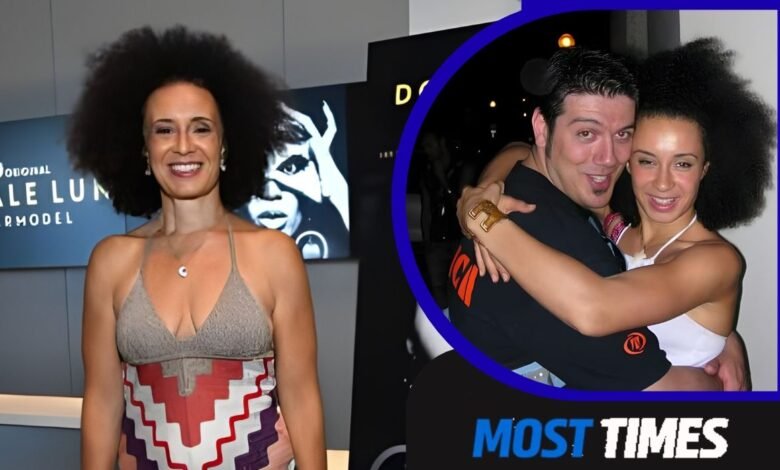
Dream Cazzaniga is the daughter of Donyale Luna, the model who made history on British Vogue’s March 1966 cover. Yet her place in this story goes beyond a family connection. Through writing and documentary work, she has helped audiences meet the woman behind the famous photographs and understand why her achievements deserve lasting attention.
Quick Bio Table
| Detail | Information |
|---|---|
| Full name | Dream Cazzaniga |
| Known for | Sharing and preserving Donyale Luna’s story |
| Birth year | 1977 |
| Birthplace | Tuscany, Italy, according to her own account |
| Mother | Donyale Luna |
| Mother’s birth name | Peggy Ann Freeman |
| Father | Luigi Cazzaniga |
| Father’s profession | Photographer |
| Family background | African American maternal roots and Italian paternal roots |
| Childhood | Raised in Europe by her father and his family |
| Mother’s death | 1979 |
| Age at mother’s death | About 18 months |
| Published writing | Personal essay in British Vogue |
| Notable screen project | Donyale Luna: Supermodel, released in 2023 |
| Documentary contribution | Executive producer, participant, and reader of Luna’s journals |
| Film director | Nailah Jefferson |
Who Is Dream Cazzaniga?
Dream Cazzaniga is best understood through two connected roles: a daughter learning about a parent she barely knew, and a contributor helping bring that parent’s work to a wider audience. Her public profile rests largely on those efforts. Calling her simply a celebrity’s child misses the care involved in working with family history. At the same time, her connection to Luna does not justify treating every online claim about her as fact. Her published reflections and documented film involvement offer a stronger basis for understanding her life than unsourced profiles or guesses about her private affairs.
Her Birth and Childhood in Europe
Dream describes her birth in the Tuscan countryside in autumn 1977. After losing her mother as a toddler, she grew up with her father and his family in Europe, including rural Italy. Those details matter in two ways: they ground her upbringing in a specific setting, and they explain why her understanding of Luna developed through family accounts rather than many direct memories. Some online profiles give a different birthplace, but her own account provides the clearest basis for this article. An exact birthday should not be added without a dependable record confirming it.
Her Father, Photographer Luigi Cazzaniga
Luigi Cazzaniga connects Dream’s family life with the visual record of Donyale Luna’s later years. He was both Luna’s husband and a photographer who captured her, giving his work personal as well as artistic value. His preserved collection of photographs, moving images, and writings helped make the documentary possible. That contribution has two sides: the material records how Luna looked and worked, while the family connection supplies context that an isolated fashion photograph cannot. For Dream, these records offered a way to encounter her mother through creative work that survived beyond her short life.
Donyale Luna’s Historic Place in Fashion
Donyale Luna’s best-known milestone came in March 1966, when she became the first Black model on the cover of British Vogue. David Bailey photographed the cover, which placed her within one of fashion’s most influential publications. The achievement deserves precise wording: this was British Vogue, not American Vogue, whose first Black cover model was Beverly Johnson in 1974. Two points help explain the distinction. Different national editions have their own histories, and recognizing Luna’s earlier breakthrough does not diminish Johnson’s later achievement. Both belong in an accurate account of how Black women changed mainstream fashion.
Her Mother’s Career Beyond One Cover
Luna’s career extended well beyond the image most often used to introduce her. She modeled for designers including Yves Saint Laurent, Valentino, and Paco Rabanne, and worked with major photographers such as Richard Avedon. She also moved through experimental art and film, with screen appearances including Fellini Satyricon and Salomè. Together, these activities show both her range as a performer and her interest in settings outside conventional fashion work. For readers learning about Dream’s family, this broader career matters: the legacy she helps preserve includes a working artist’s choices, not just a single historic magazine appearance.
Fame Did Not Protect Luna From Racism
The attention Luna received did not mean the industry offered her equal treatment. Accounts of her career describe resistance from advertisers, readers, and influential figures who objected to presenting a Black woman as a fashion ideal. This creates two necessary parts of her story: she gained major opportunities, but prejudice still restricted what she could do. Her success should therefore not be used as proof that barriers had disappeared. Understanding that tension also clarifies the documentary’s purpose. It asks audiences to consider both the work she achieved and the conditions under which she had to achieve it.
Losing Her Mother at a Young Age
Donyale Luna died in 1979 at age 33, leaving Dream about 18 months old. The immediate consequence was the loss of a parent; the longer consequence was having to learn about a mother whose public image often overshadowed her personal life. Any account of that loss should resist turning it into spectacle. Luna’s death belongs in the chronology, but it does not explain the whole person or erase her achievements. For Dream’s story, the more useful focus is how surviving records and people who knew Luna made it possible to build a connection across that absence.
Dream Cazzaniga and the 2023 Documentary
Donyale Luna: Supermodel premiered on HBO on September 13, 2023, with Nailah Jefferson directing. Dream participated in the film and served as an executive producer, placing her within the project’s creative team as well as its family story. These roles should be kept distinct: Jefferson directed the documentary, while Dream brought a daughter’s involvement and perspective. The film combines historical material with contributions from people connected to fashion and Luna’s life. Its value lies partly in that combination, allowing personal testimony and a wider account of the industry to inform each other rather than stand alone.
Why Reading Luna’s Journals Matters
One of Dream’s most meaningful contributions to the film is reading her mother’s journal entries. A fashion photograph can record a pose, expression, or garment, but a journal can reveal how its writer described a hope, setback, or ambition. Bringing those forms together changes the viewer’s experience: Luna becomes someone with an inner voice as well as a memorable face. The daughter’s reading adds emotional weight, though it should not be mistaken for direct childhood recollection. The words come from surviving writings, while the performance belongs to the later act of telling and interpreting that history.
Separating the Woman From the Public Persona
Luna developed a striking public persona, and press coverage often treated her appearance as strange, mysterious, or otherworldly. Contemporary attention shows how strongly she registered in fashion: TIME devoted an April 1966 feature to her rising prominence in Europe. Yet two different things can exist in the same coverage. A report may document real success while also revealing the limiting language through which a Black woman was viewed. Reading that material critically helps prevent old descriptions from becoming a substitute for understanding. Dream’s contribution encourages audiences to consider a person whose work deserves examination beyond the fascination surrounding her image.
What Is Publicly Known About Dream’s Own Life?
Dream has shared selected details through her writing, including that she had built a family of her own in France when she wrote her personal essay. That is a dated account, not proof of her current address or circumstances. Her public writing is a concrete part of her work, while many details sought by celebrity profiles remain less securely documented. Claims about her education, income, spouse, or an extensive career history should therefore require separate verification. A useful profile can acknowledge those limits and still explain her contributions without filling gaps with estimates presented as facts.
Final Thoughts
Dream Cazzaniga’s public contribution is helping restore depth to the story of Donyale Luna. Her involvement gives readers and viewers a family perspective, while the photographs, journals, and documentary provide material through which to examine the wider history. The strongest account holds both elements together: the daughter’s personal connection and the model’s place in a changing, unequal industry. Dream does not need an invented celebrity lifestyle to make her story worth reading. Her documented work already shows how a daughter can help a new audience recognize an artist whose influence outlasted the attention she received.
Frequently Asked Questions (FAQs)
1. Who is Dream Cazzaniga?
Dream Cazzaniga is the daughter of model and actor Donyale Luna and photographer Luigi Cazzaniga. She is known publicly for helping tell her mother’s story through published writing and the documentary Donyale Luna: Supermodel.
2. When was Dream Cazzaniga born?
Dream was born in 1977, and her own account places her birth in Tuscany, Italy. A precise birth date is not established here, so an exact age should not be calculated from an unverified birthday.
3. Who is Dream Cazzaniga’s father?
Her father is Italian photographer Luigi Cazzaniga, who was married to Donyale Luna. His archive of photographs, videos, and writings provided important material for the documentary about her life and work.
4. How old was Dream when Donyale Luna died?
Dream was about 18 months old when her mother died in 1979. She consequently learned much about Luna through surviving records and other people’s accounts rather than a large store of personal memories.
5. What did Dream do in Donyale Luna: Supermodel?
She served as an executive producer, appeared as a participant, and read entries from her mother’s journals. Nailah Jefferson directed the film, so Dream’s involvement should not be confused with the director’s role.
6. Why is Donyale Luna important in fashion history?
Luna became the first Black model to appear on British Vogue’s cover in March 1966. Her work across modeling, film, and experimental art also makes her career broader than that one milestone.
7. Has Dream Cazzaniga written about her mother?
Yes, she wrote a personal essay published in British Vogue’s May 2019 issue and republished online in 2023. It offers her perspective on learning about Luna and understanding the legacy her mother left behind.
8. Is Dream Cazzaniga’s net worth publicly verified?
No reliable financial documentation was identified for a net worth figure in this profile. Documentary involvement alone does not establish someone’s personal wealth, so unsupported online estimates should not be treated as verified information.
Recommended: Who Is Cara Connolly? Meet Billy Connolly’s Daughter



2 Comments